How To Get Gps Time For Mac
Installation of a Garmin GPS device on a PC or Mac for usage on RouteYou On this page you will find information about the installation of a Garmin GPS device on a PC or Mac such that the RouteYou website can access your device. When the RouteYou website can access your Garmin device, you can download routes from the route download page directly on your Garmin device. More information about downloading a route from RouteYou on your Garmin device is available on the page. Here you can also find information here about problems you can encounter during the installation of your Garmin device. Installation on a PC (Windows) The installation consists of the following steps:.
Installation of the Garmin USB driver software. Installation of the Garmin Communicator Plugin. Performing a test to see if your web browser detects your Garmin device You can find more information about these step further on this page. The following web browsers are supported by the Garmin Communicator Plugin:. Internet Explorer 7 and higher.
Firefox. Opera Google Chrome does not longer support usage of the Garmin Communicator Plugin. Installation of the Garmin USB driver software First you have to install the Garmin USB driver software. This program is required by Windows to communicate with your Garmin device. You can download it from the Garmin website: Installation of the Garmin Communicator Plugin After you installed the Garmin USB driver software, you have to install the Garmin Communicator Plugin. This program is required to let websites, including the RouteYou website, use your Garmin device. You can download it from the Garmin website: Performing a test to see if your web browser detects your Garmin device After the installation of the Garmin USB driver software and the Garmin Communicator Plugin, you have to check if the installation was successful.
You can check this by following these steps:. Make sure you Garmin device is turned off. Connect the device to a free USB port on your PC.
Depending on which Garmin device you have, it's possible that you have to turn on your device manually. Wait 30 seconds. Open your web browser.
Visit the following web page on the Garmin website:. From this page there will be tried to detect the connected Garmin device. If everything is OK, you will see the model name of your device.
Example:. Your Garmin device is installed correctly! Now you can download routes from the RouteYou on your device. You can find more information about this on the page. Installation on a Mac (OS X) The installation consist of the following steps:. Installation of the Garmin Communicator Plugin. Performing a test to see if your web browser detects your Garmin device You can find more information about these step further on this page.
The following web browsers are supported by the Garmin Communicator Plugin:. Firefox. Safari Installation of the Garmin Communicator Plugin First you have to install the Garmin Communicator Plugin. This program is required to let websites, including the RouteYou website, use your Garmin device. You can download it from the Garmin website: Performing a test to see if your web browser detects your Garmin device After the installation of the Garmin Communicator Plugin, you have to check if the installation was successful. You can check this by following these steps:. Make sure you Garmin device is turned off.
Connect the device to a free USB port on your Mac. Depending on which Garmin device you have, it's possible that you have to turn on your device manually. Wait 30 seconds. Open your web browser. Visit the following web page on the Garmin website:. From this page there will be tried to detect the connected Garmin device. If everything is OK, you will see the model name of your device.
Example:. Your Garmin device is installed correctly!
How To Get Gps Time For Macbook
Now you cab download routes from the RouteYou on your device. You can find more information about this on the page. Troubleshooting Problem: I installed the Garmin USB software driver (Windows only) and the Garmin Communicator Plugin correctly, and I also connected my Garmin device correctly (and if required, turned it on), but when I visit the web page mentioned in step 6 of Performing a test to see if your web browser detects your Garmin device, the detection of Garmin devices doesn't stop (see the screenshot below). What do I have to do? Solution: try to reload the web page. It's possible that you have to do this a couple of times.
Problem: I installed the Garmin USB software driver (Windows only) and the Garmin Communicator Plugin correctly, and I also connected my Garmin device correctly (and if required, turned it on), but when I visit the web page mentioned in step 6 of Performing a test to see if your web browser detects your Garmin device, I get a message that the Garmin device could not be detected (see the screenshot below). What do I have to do? Solution: you first can try to do the following things:. Check if the USB cable is connected properly (both on the side of the computer and the side of the Garmin device). Fo some Garmin devices, it's required to turn on the device before the computer can detect it. In that case, check if the device is turned on.
Try to reload the web page. If the problem. If the problem still occurs, you can try the following things:. Maybe there's a defect with the USB port of your computer.
Check if the problem is solved when you connect the device to another USB port of your computer. Maby there's a defect with the USB cable. Check if the problem is solved when you use another USB cable. Check if the problem occurs on another computer. Don't forget to install your Garmin device on that computer first (see earlier).
If the problem still occurs, it's possible that there's a defect with you device, or that USB access is disabled on your device (check the manual of your Garmin device). Problem: I installed the Garmin Communicator Plugin correctly, but when I visit the web page mentioned in step 6 of Performing a test to see if your web browser detects your Garmin device, I get a message that the Garmin Communicator Plugin could not be detected (see the screenshots below). What do I have to do? Solution: reinstall the Garmin Communicator Plugin. If the problem still occurs, it's possible that your web browser blocks the Garmin Communicator Plugin. In that case you have to unblock the Garmin Communicator Plugin. It depends on your web browser how you can do this.
Check the help system of your web browser to find out how to unblock a plugin. Problem: on my Mac I installed the Garmin Communicator Plugin correctly, but when I visit the web page mentioned in step 6 of Performing a test to see if your web browser detects your Garmin device on Safari 7, I get a message that the Garmin Communicator Plugin could not be detected. When I try to reload the page a couple of times, the plugin is detected sometimes and sometimes not. What do I have to do? Solution: This problem is caused by the security restrictions that Safari uses for plugins. You can disable these restrictions for the Garmin Communicator Plugin as follows:.
Start Safari. Visit the following web page on the Garmin website:. If Safari asks you if you want to use Garmin Comminucator Plug-In, click on the Trust button.
Go to Safari-Preferences. In the menu bar.
Click on the Security button in the window you now see. Make sure the Internet plug-ins: Allow Plug-ins checkbox is checked. Click on the Manage Website Settings. In the left column of the window you now see, select the Garmin Communicator Plug-In. In the right column, select the option Ask for the websites software.garmin.com and www.routeyou.com. Click on the button Done. Close the preferences window.
Reload the page and repeat steps 3 to 8. In the right column, select the option Allow Always for the websites software.garmin.com and www.routeyou.com.
Click on the button Done. Close the preferences window. Close Safari by choosing Safari-Quit Safari from the menu bar (so not by just closing the window, but completely terminate Safari). Restart Safari. It's possible that you have to repeat steps 2 to 17 a couple of times before it works.
With sad hearts, we must inform you that Apple recently announced that they are phasing out 32-bit Mac application support. Some applications will be affected in the the fall of 2018, and the rest will no longer be supported at all by Apple under the future 2019 macOS upgrade.
The map files in MacGPS Pro use the 32-bit-only PICT format and hence will no longer be usable with future Apple macOS system software updates. Therefore, we have made the decision to stop selling new copies of our Mac products on January 31, 2018. You don't have to maintain a separate old computer or refrain from updating the operating system on your main computer. Here's how: Install the free Parallels Desktop Lite Virtual Machine software (download from the Mac App Store), and then install a version of the Mac operating system on it which can run MacGPS Pro. (We recommend El Capitan, but Sierra or High Sierra will also work.) Then when you update your Mac Hardware or operating system software, just keep the Parallels Desktop Lite application updated and leave the operating system installed into Parallels Desktop Lite unchanged so it will continue to run MacGPS Pro.
Apple recently announced that they are phasing out 32-bit Mac application support completely in the the fall of 2019. The map files in MacGPS Pro use the 32-bit-only PICT format and hence will not be usable with future Apple macOS system software updates. Garmin has reduced the compatibility of many of their newer receivers so that MacGPS Pro cannot transfer waypoints, routes and tracks to and from them.
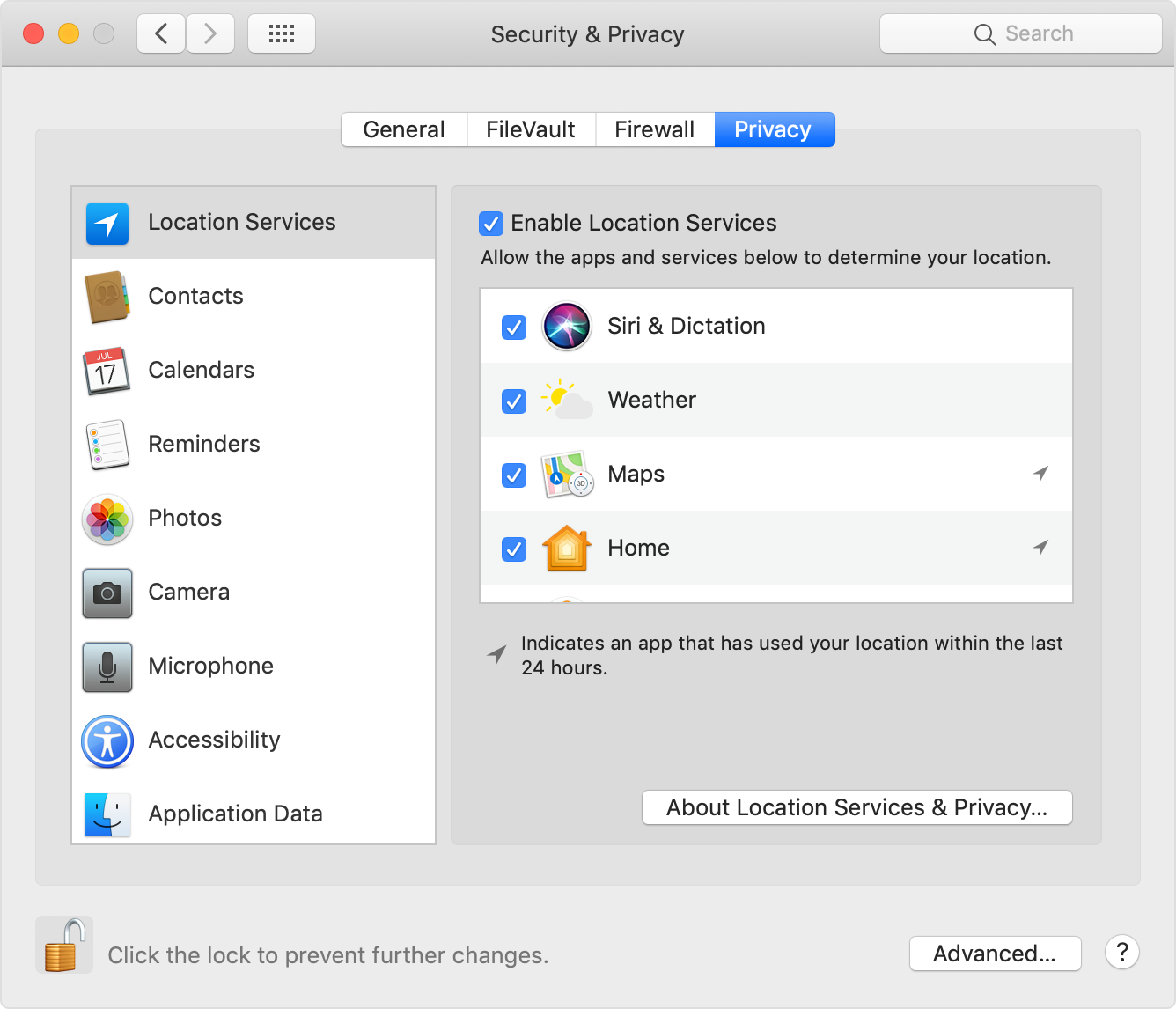
The vast majority of our MacGPS Pro customers have switched to using our apps mostly on iOS devices rather than on their less-portable Mac computers. Almost all of our new customers are purchasing iHikeGPS or iSailGPS for their iPhone or iPad rather than purchasing MacGPS Pro and MacTopos maps. Software Questions. MacGPS Pro works the same way under El Capitan that it does on older versions of Mac OS X. But because of Apple's new GateKeeper security software, the first time you start MacGPS Pro on Mac OS X 20.11 or later, you will have to go through a one-time procedure to tell GateKeeper that you will allow MacGPS Pro to run on your computer. In the Macintosh Finder, locate the MacGPS Pro application.
Hold down the control key and click the app. Choose Open from the pop-up menu to show this window:.
Click Open. As long as the window shows that the application was downloaded from macgpspro.com, this is perfectly safe. James Associates could have digitally signed the MacGPS Pro app to save you from going through this step, but to do so we would have had to remove support for Power PC Macs and for versions of OS X older than Snow Leopard. We chose to continue to support these older systems. There is no demo?
That's right! A demo either limits the availability of features or the time to try the program. We don't want a crippled version that doesn't give you a full picture of the software, or a demo with a time limit for trying various features that you just can't get to because the clock quits ticking. Through the years, MacGPS Pro has been continuously developed with many features arising from customer suggestions, so it performs a wide variety of tasks today. If we provided a demo, it would be impossible to know which facet of the program that you wanted to explore. And we want you to be able to experience any or all of the many features you desire without the stress of a clock ticking.
Take your time and enjoy the benefits! Because we offer a, you have nothing to lose. Also, compare our cost with those of other software companies that do offer demos. Truth is, demos cost money for development, and that expense is passed on to you, the consumer.
James Associates would rather spend time adding new features to MacGPS Pro than develop a demo and charge you more for our program to cover those extra development costs. Garmin GPS units do not follow normal USB communications standards.

MacGPS Pro contains custom code to allow communication over USB with the Garmin receivers. Each Garmin receiver, and even each release of the Garmin internal software for the same receiver, seems to do the USB communication a little differently. MacGPS Pro will work with the eTrex Vista and Legend C, Cx and HCx receivers when connected to a USB port with the Garmin-supplied cable. MacGPS Pro tries to be compatible with as many different Garmin receivers and internal software versions as possible, but there are still receivers that we are not able to be compatible with. MacGPS Pro will NOT work with eTrex Venture C, Cx and HCx receivers or the eTrex H receiver, so purchase an eTrex Vista or an eTrex Legend model instead if you want to use MacGPS Pro with an eTrex GPS.
When using the USB Port with Garmin's cable: You must be running Mac OS X 10.3.8 or later. When connected to the Garmin USB port, real-time data uses PVT mode only. MacGPS Pro is designed for off-road use, not for highway navigation. Nevertheless it will transfer waypoints, routes and tracks, and collect real-time data for some Street Pilot Receivers such as the Street Pilot III. It will also work for waypoint, route and track transfer (no real-time data) with some Nuvi receivers which have a USB interface identical to the Garmin Oregon series of receivers. There are a huge number of different Nuvi models that we do not have access to for testing, so we cannot provide a list of which Nuvi receivers work and which do not.
In any case, MacGPS Pro will not load maps into a Street Pilot or a Nuvi receiver. We suggest that for highway use, Mac owners purchase one of the Nuvi receivers which has maps for the entire country pre-installed.
These receivers have two different modes in which they operate when connected to a Mac. One mode is Real-Time 'Garmin Serial mode', which operates when the receiver is actively receiving signals from the GPS satellite. One these receivers, this mode is used only for items under the MacGPS Pro Real-Time menu. To use the Real-Time functions you must use a The Garmin 'Spanner' mode does not work with MacGPS Pro.
The other mode is 'USB Mass Storage mode', where the Garmin receiver looks to the Mac like an external USB mass storage drive. In this mode the receiver is not actively tracking the GPS satellites. To confirm this mode, you will see a picture on the GPS receiver screen showing a USB symbol, or showing the receiver connected to a computer with a USB cable.
This mode is used for items under the MacGPS Pro Transfer menu for Waypoints, Routes, and Tracks. GPS receivers use vector-based maps for display on their screens. USGS DRG (Digital Raster Graphics) maps have too much detailed information for the memory and display capabilities of most hand-held GPS receivers.
The best use of DRG maps, and the use which MacGPS Pro provides, is to use the map on your Macintosh screen. You can plan a trip by generating waypoints and routes to transfer to your receiver. You can use the map on your Mac screen in real time as you travel with the GPS receiver connected. After your trip, you can transfer tracks from the GPS to view on the DRG map where you went.
For optimum resolution and seamless map stitching, we recommend our series. MacGPS Pro is also an excellent viewer for USGS & US Forest Service Digital Raster Graphic topo maps, BSB versions 1, 2, 3, 4 and 5 marine charts, FAA flight sectionals, and many other digital maps. Digital maps come in two different types. Raster maps are a scanned or photographed image of a paper map. This is the type of map that MacGPS Pro uses. Vector map files contain a mathematical description of the lines and areas that make up the map. MacGPS Pro does not support maps in vector format.
Garmin '.IMG' files are vector maps. Maps and charts in raster-image formats such as TIF, PNG, JPG, PDF, ECW, BSB ('.kap' and '.cap'), NOS/GEO, PICT, GIF, BMP, and PSD can be opened or imported into MacGPS Pro. These images will be automatically georeferenced if they are in GeoTIFF format, in ECW format, in GeoPDF format, in BSB format, or if they are accompanied by a 'world' file ('.TFW', '.JGW', '.GFW', '.PGW', or '.EWW') with a '.PRJ' or a '.FGD' file, a '.IMP' file (a CompeGPS calibration file), a '.JPR' file (a Fugawi calibration format) or a '.MAP' file (an OziExplorer calibration file). OziExplorer OZF2 image files are not supported.
Maps may be purchased, obtained by downloading them from the Internet, or by scanning them yourself. Maps can be calibrated and used on your Macintosh screen with or without a GPS receiver connected. USGS and US Forest Service topo maps, aerial photos from the, and many other maps from diverse sources are automatically calibrated. Maps that do not contain calibration information can be manually calibrated with ease by clicking on a few known points.
Check our to help find maps for your area. Please note that MacGPS Pro does not upload maps to any GPS receiver; the maps are used on the Macintosh screen. For raster maps on a handheld device, see our and apps for the iPhone and iPad. Follow these instructions for importing your own scanned maps:. Scan in any paper map.
Save the scanned image as a JPG or TIF file. From the File menu, choose 'Import' and select your file. The software prompts you to enter map data, including projection and datum. (This is typically found along most outer margins of a printed map.). The scanned image is then displayed in the map window. Click on a known point and enter its latitude and longitude. (Refer to the MacGPS Pro Help menu).
Repeat with at least one other known point (four points is ideal). Click 'Done'. Your map is now georeferenced and ready to use.
MacGPS Pro provides coordinate conversions to-and-from the following 123 user-selectable datums: Adindan Corrego Alegre Israeli NAD27 Greenland Qornoq Afgooye Croatia ISTS 073 Astro '69 NAD27 Mexico Reunion AIN EL ABD 1970 Djakarta (Batavia) Johnston Island NAD27 San Salvador Rome 1940 Anna 1 Astro 1965 Dos 1968 Kandawala NAD83 RT 90 ARC 1950 Dutch Kerguelan Island Nahrwn Masirah Ilnd Santo (Dos) ARC 1960 Easter Island 1967 Kertau 1948 Nahrwn Saudi Arabia Sao Braz Ascension Island '58 European 1950 L.C. United States Geological Survey (USGS) topo maps cover the entire country at two or three different scales. United States Forest Service (USFS) topo maps are only available in the 1:24K scale, and only for those quadrangles which contain Forest Service land. Some USGS topo maps have not been updated since the 1970's. While the topography normally does not change much, man's contribution to the landscape in terms of additional trails and roads has changed considerably for areas covered by some of these maps. The USFS had an internal need for more up-to-date maps, so they started a joint program with the USGS to update maps for the national forest areas.
The USFS and the USGS signed an interagency agreement in August, 1993, that calls for the cooperative updated mapping of all Forest Service lands. These updated maps have proved so useful that they have been released to the public and recently updated (none older than 2009). MacTopos 4.0 makes them available to you for use with MacGPS Pro. Garmin uses a proprietary map transfer protocol. No third-party Macintosh software uses it. MacGPS Pro cannot transfer Garmin's MapSource maps into Garmin receivers.
Garmin provides Mac software which will do this. On the other hand, MacGPS Pro provides two-way transfer of waypoints, routes, and tracks. It is complimentary to Garmin's software. While Garmin's software limits the customer to Garmin's maps only, MacGPS Pro allows you to use most other maps on your Macintosh screen,including Digital Raster Graphics topo maps. GPS receivers use vector-based maps for display on their screens.
USGS DRG (Digital Raster Graphics) maps have too much detailed information for the memory and display capabilities of most hand-held GPS receivers. The best use of DRG maps, and the use which MacGPS Pro provides, is to use the map on your Macintosh screen. You can plan a trip by generating waypoints and routes to transfer to your receiver. You can use the map on your Mac screen in real time as you travel with the GPS receiver connected. After your trip, you can transfer tracks from the GPS to view where you went on the DRG map.