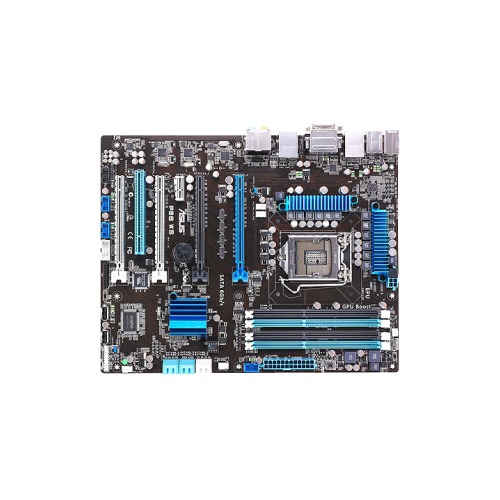
Pci Card Layout For Mac
We hope the information provided here has been helpful. If you need further assistance with your purchase choice, please call our sales department toll free at 1-800-588-5290.
This number is for sales related questions only! If it is after sales hours you can issue a help desk ticket by e-mailing. We welcome all Resellers, Schools, and Government purchases. If you have technical questions or concerns about your order relating to defective parts, return issues, shipping questions, order status, and tracking numbers, please submit a help desk ticket by emailing. Customer support and technical support questions are processed through our help desk only.
Please allow 1-2 business days for a response when issuing a help desk ticket. Thank you for shopping We Love Macs!.PCI Express slots are not compatible with PCI or PCI-X expansion cards.
How do I know if what slot I have? PCI - Also annoyingly called 'Conventional PCI' (like there's an unconventional version?). This is good old 32 and 64 bit PCI that you've come to know and love. The PCI spec has been undergoing a significant set of changes over the years to try to keep pace with speed and system advances. One thing you probably haven't noticed (and don't care about unless you're a hardware guy) is a change from 5V signalling to 3.3V. The spec to which vendors are implementing now is PCI V2.2; There are a PCI V2.3 and PCI V3.0 already defined.

Are you asleep yet? PCI-X - The PCI SIG likes to call this 'High performance, backward compatible PCI for the future' which just means that the PCI SIG is not lacking marketing people. PCI-X uses all the same connectors and stuff as 'conventional' PCI.
The transfer speed is indicated by the goofy moniker added to the end, as in 'PCI-X 66' (which supports a 66MHZ clock rate) or 'PCI-X 133' (which supports a 133Mhz clock rate). Because the data is transfered in parallel, either 32 or 64 bits at a time (or even 16 bits at a time, don't ask), this means that PCI-X 133 offers a bandwidth of 1.0GB/second, and PCI-X 533 could offer a bandwidth of 4.3GB/second. That's all theoretical, of course. If anybody ever builds a system that supports PCI-X 533, drop me a line, OK? PCI Express - This is an entirely new bus architecture, previously known by the name '3GIO.' It's got new connectors and everything.
It even defines a new PC Card (PCMCIA) standard called Express Card. How different is PCI Express from stuff that came befor it? Well, for one thing, it performs serial data transfers and it starts with a base transfer rate of 2.5Gb/second. Data is transfered in packets, and effectively routed via a switch. Transfers are bi-directional, so data can flow to and from a device simultaneously.
Since data is switched, more than 1 device can be transfering at the same time. What's even more fun about PCI Express is that cards can utilize as many as 16 transfers in parallel, thus providing (are you ready for this??) up to 8GB/second total throughput (4GB/second in each direction). These parallelized serial transfers are what are referred to as 'PCI Express x8' (pronounced 'by eight', by the way) for 8 parallel bit streams or 'PCI Express x16' for 16 parallel bit streams.
And, here's some cool news: AGP is being replaced with x16 PCI Express connections.
USB Cards for PCI Macs This page was first posted in 1999. It is outdated and will no longer be updated. It is here for historical purposes only, as it predates USB 2.0 by some time. USB PCI 2.0 cards you may want to consider are the, and the. These should all support Macs as far back as the Blue & White Power Mac G3 (and possibly older Macs as well) and Mac OS versions as far back as 8.6. They only provide USB 1.1 speed under Mac OS 8.6 through 9.2.2, and all but the XLR8 provide full USB 2.0 speed with every version of OS X.
These cards let you add USB ports to PCI Power Macs and clones. Specifications are virtually identical: two USB ports, 500 mA power to each port, requires PCI Mac or clone with Mac OS 8.1 or later (8.6 or later recommended for best USB support).
Pci Card Layout For Mac G4
All cards ship with Mac drivers or work with Apple's drivers. In cases where the card doesn't claim Mac compatibility, I am relying on feedback from Mac owners who have installed and use the cards.
Brand/Card Name Features US SRP Amedia: USB Simply Connect 2 ports Ariston: PCI slot to 2 USB port adapter 2 ports Belkin: USB BusPort for Macintosh 2 ports $49.95 Entrega: 2 Port USB Upgrade for Macintosh 2 ports Entrega: 4 Port USB Upgrade for Macintosh 4 ports iMaccessories: 2 ports $49.95 Keyspan: USB Card 2 ports $49.00 Macally: 2 ports $49.95 SIIG: 2 ports XLR8: 2 ports $44.95 Low End Mac is an independent publication and has not been authorized, sponsored, or otherwise approved by Apple Inc. Opinions expressed are those of their authors and may not reflect the opinion of Cobweb Publishing. Advice is presented in good faith, but what works for one may not work for all. Entire Low End Mac website copyright ©1997-2016 by unless otherwise noted. All rights reserved.
Pci Cards For Pc
Low End Mac, LowEndMac, and lowendmac.com are trademarks of Cobweb Publishing Inc. Apple, the Apple logo, Macintosh, iPad, iPhone, iMac, iPod, MacBook, Mac Pro, and AirPort are Additional company and product names may be trademarks or registered trademarks and are hereby acknowledged. Please report errors to.: We allow and encourage links to any public page as long as the linked page does not appear within a frame that prevents bookmarking it. Email may be published at our discretion unless marked 'not for publication'; email addresses will not be published without permission, and we will encrypt them in hopes of avoiding spammers. Letters may be edited for length, context, and to match house style.: We don't collect personal information unless you explicitly provide it, and we don't share the information we have with others. For more details, see our.